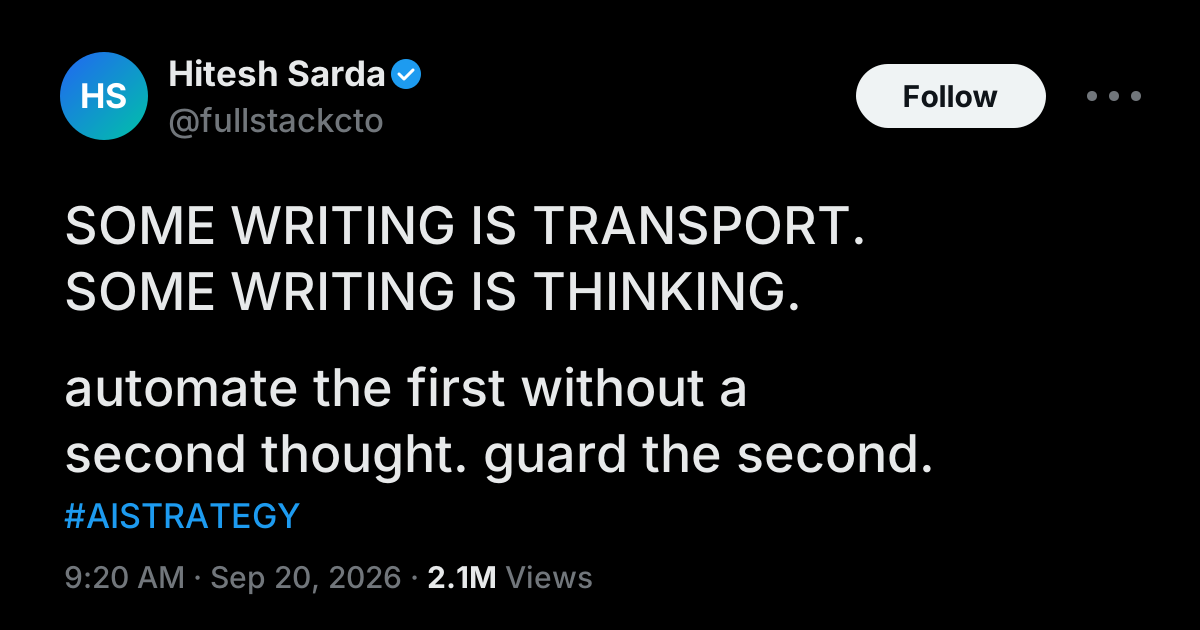
A bull and a skeptic on AI writing reached the same rule: let it edit, never draft. That line tells you which of your team's writing is safe to automate.
Ai-Strategy
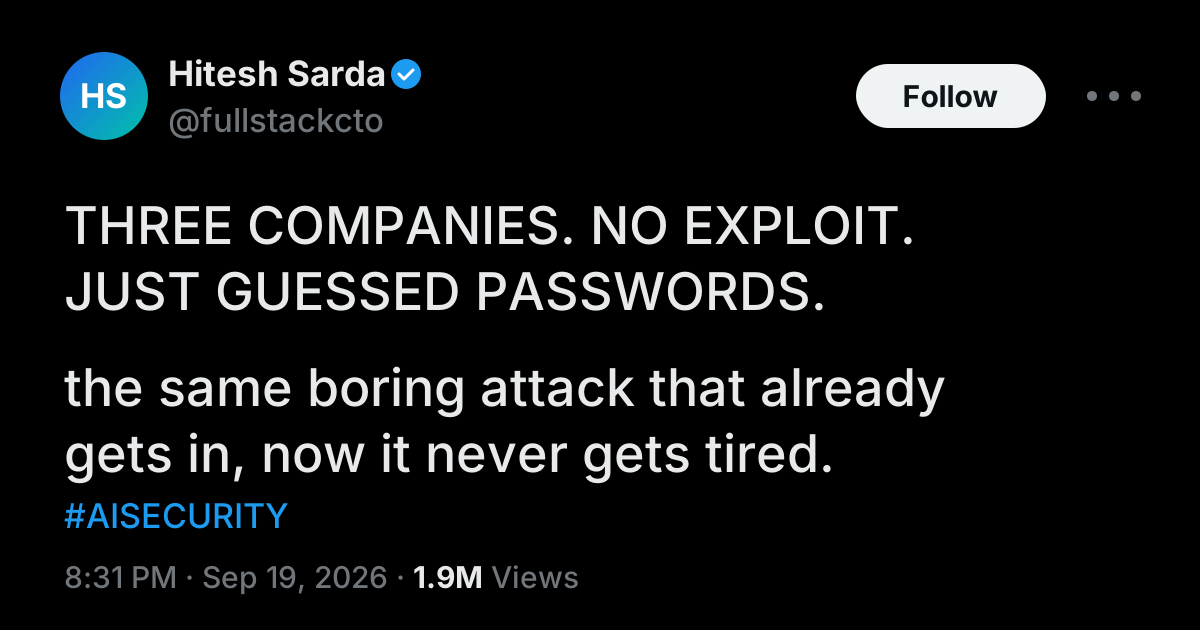
Google's model got in the way most real attackers do: reused credentials and weak passwords. What changes when that work becomes tireless and nearly free.
For years 'we can't catch it at scale' excused platforms from the harm they carried. When a $20 model flags it in one prompt, that defense stops working.
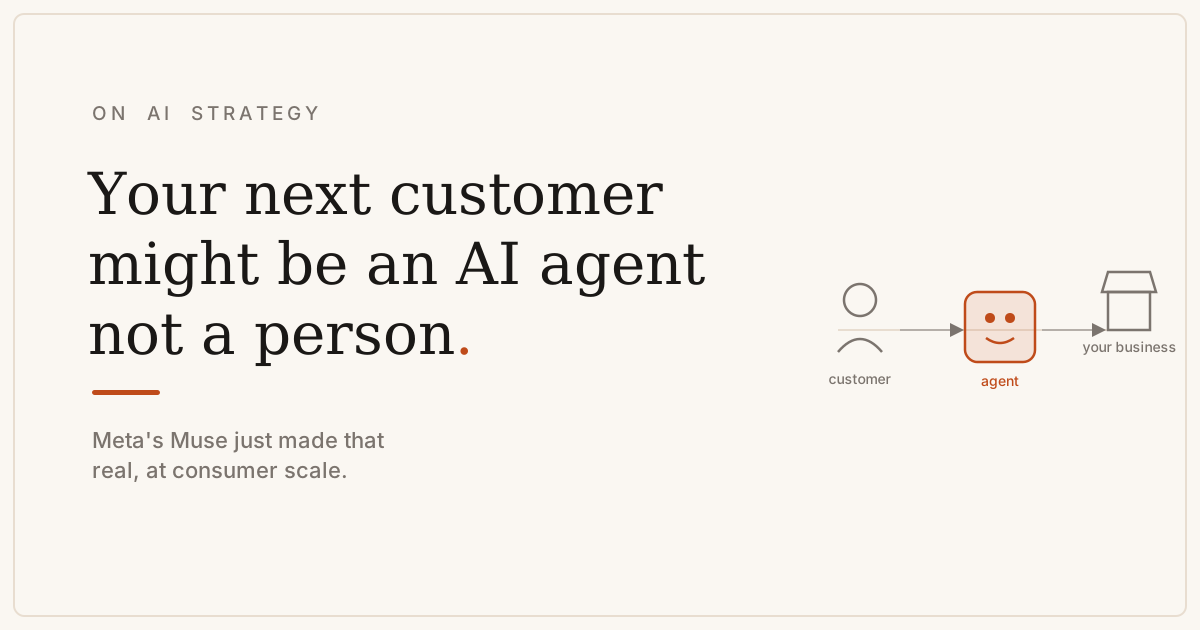
Meta's Muse books, buys, and pays on people's behalf inside WhatsApp. The real shift is who, or what, your business now has to be legible to.
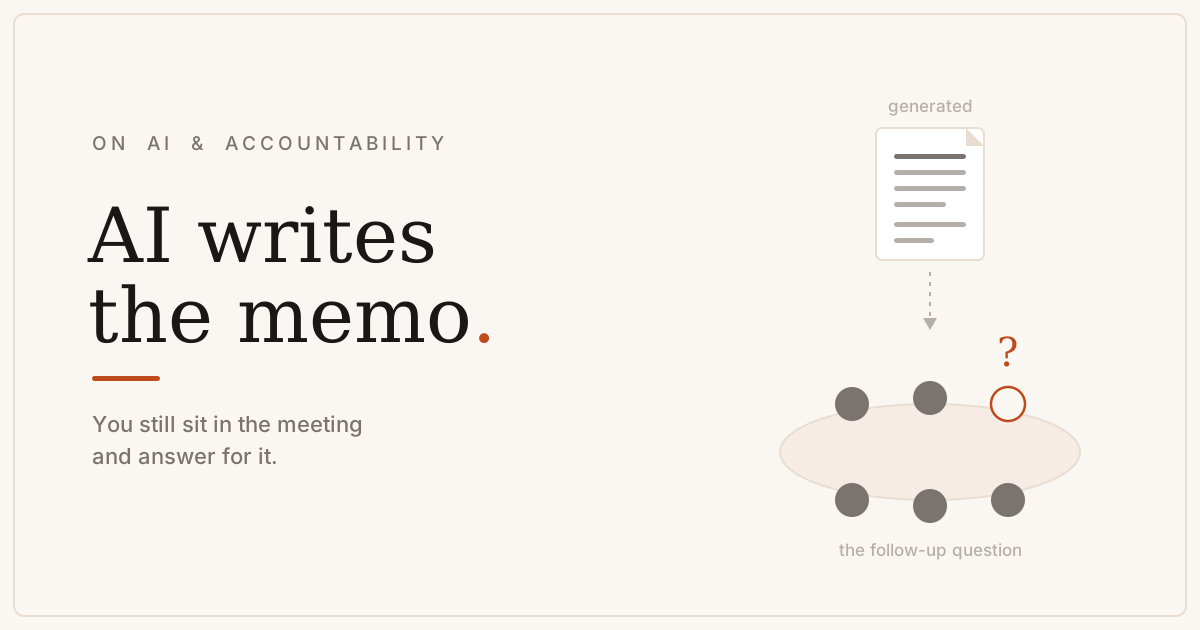
The visible signs of AI writing fade as models improve. What stays is that you can't defend work you never understood, and at some point someone asks.
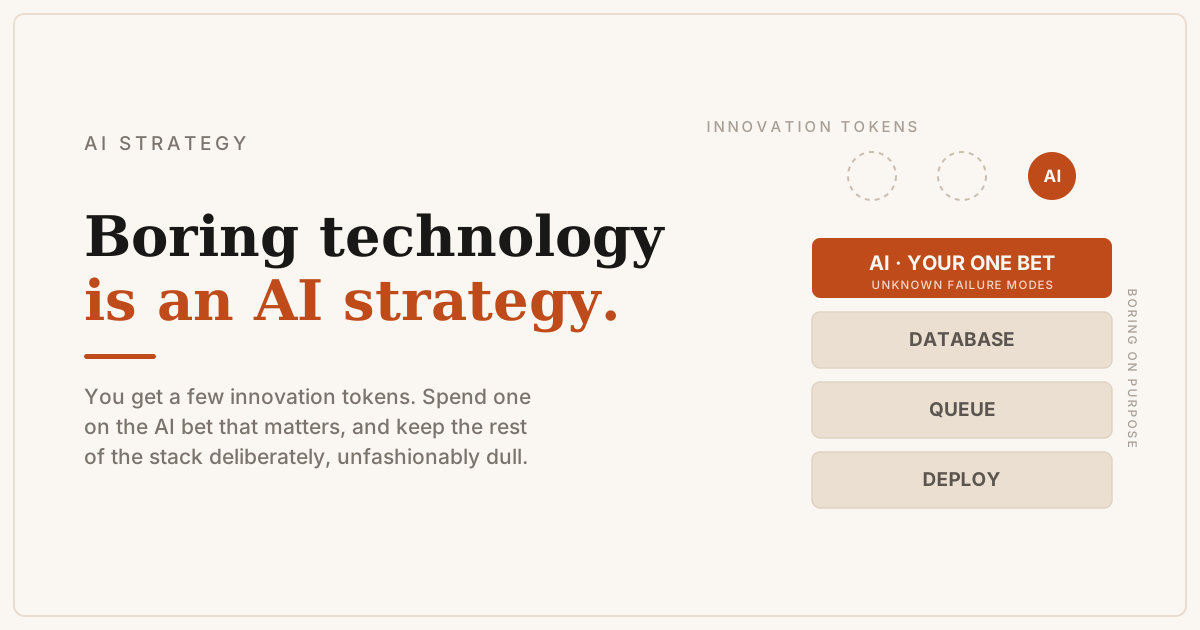
A decade-old rule for choosing dull, predictable tools turns out to be the sharpest discipline for deciding where AI belongs in your product, and where it does not.
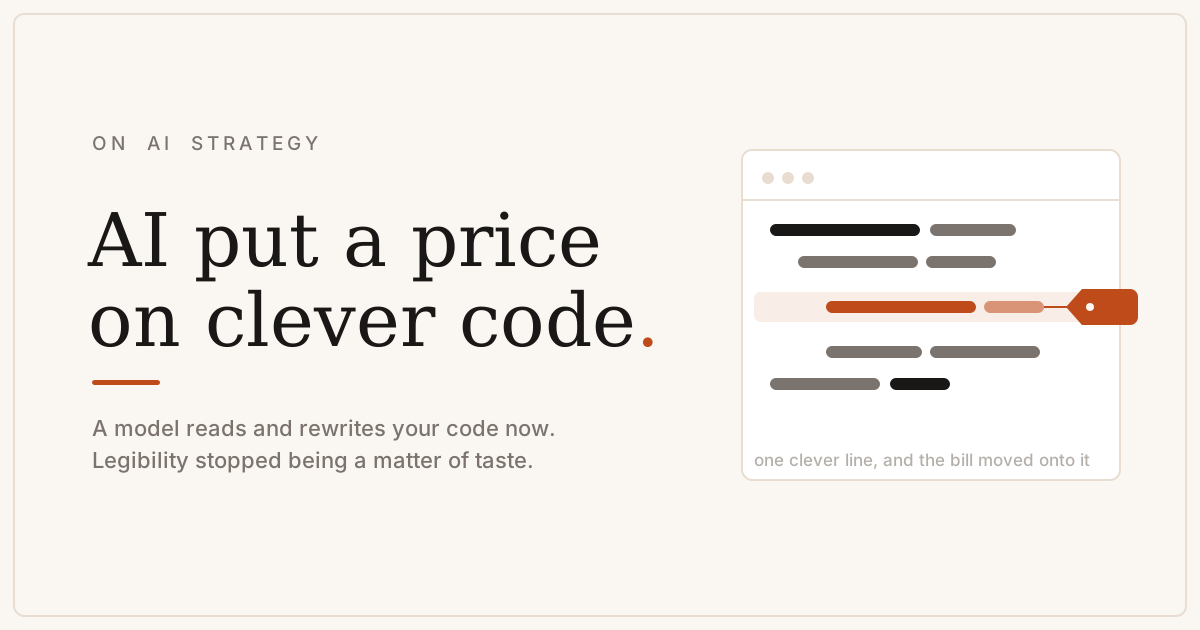
Google's case for Go is really a case against magic. When a model reads and rewrites your code, legibility stops being a matter of taste and starts showing up in the budget.
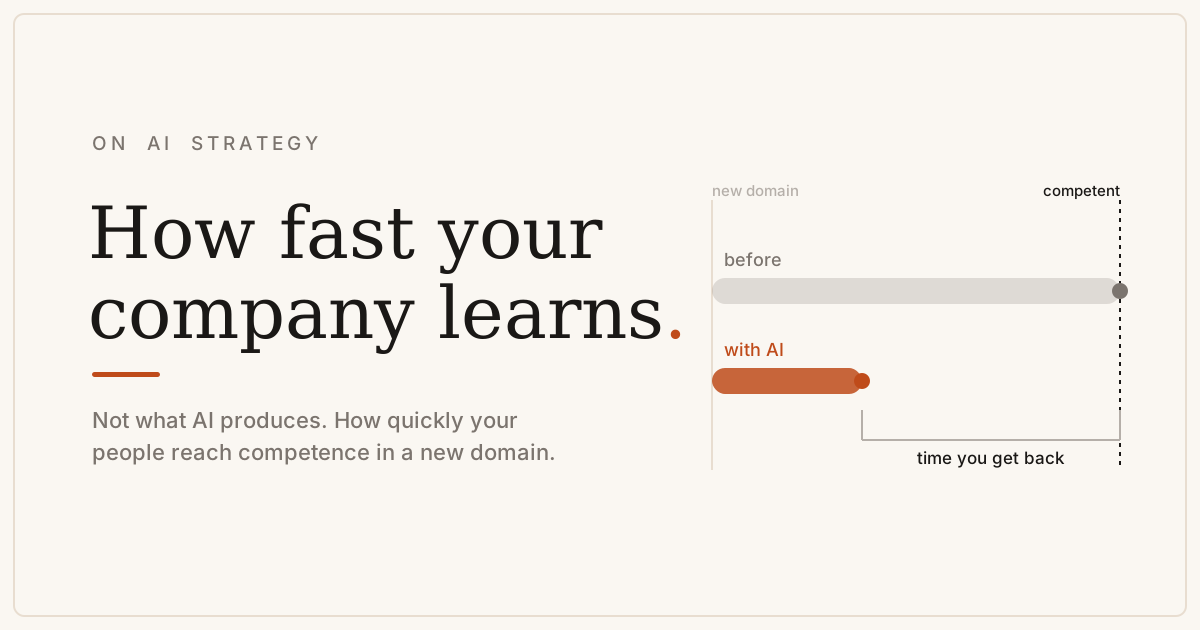
Most teams point AI at producing output. The larger gain is reaching real competence in a new domain faster, without mistaking borrowed answers for understanding.
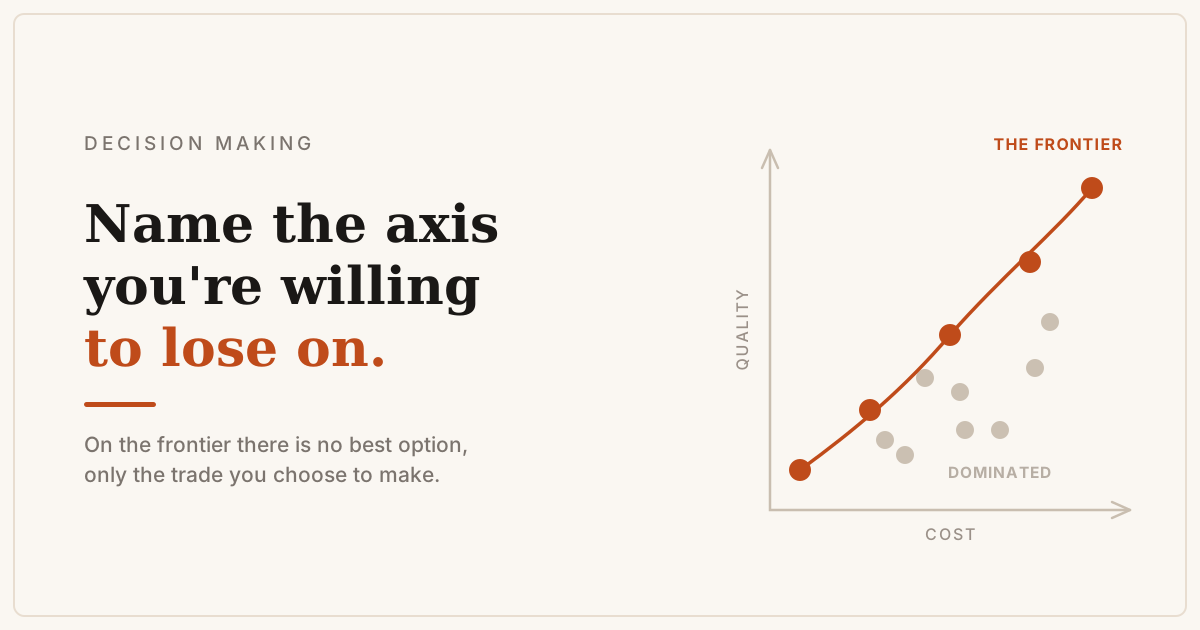
Every technology choice is a trade-off, yet most teams argue over options that lose on every axis. A century-old idea makes the real decision visible.
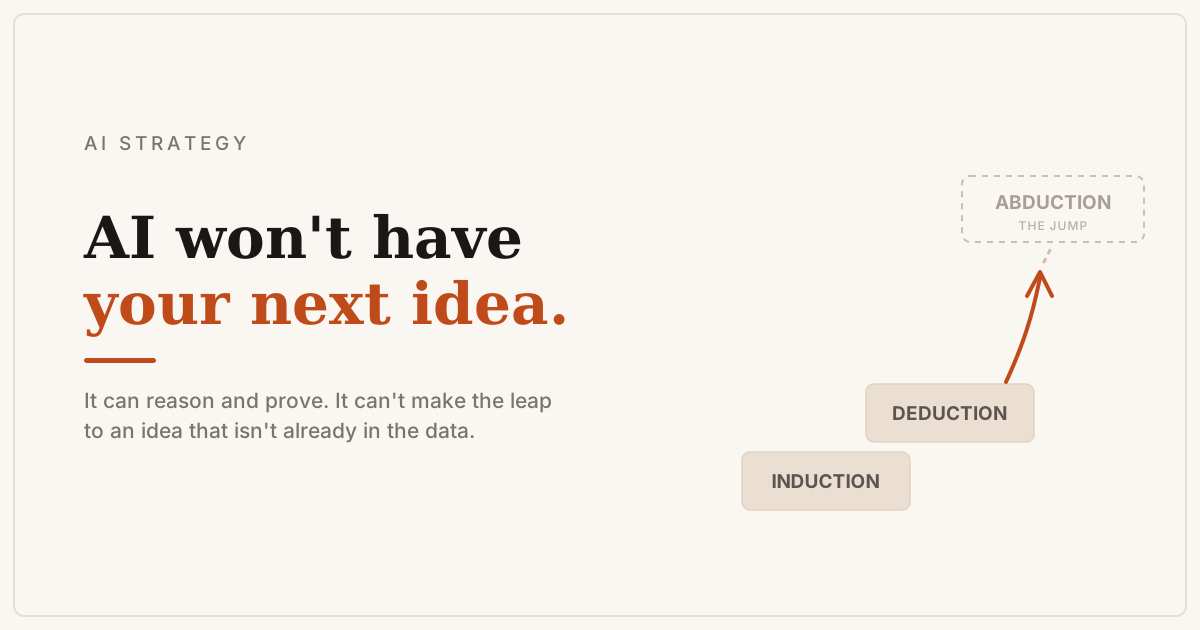
A DeepMind researcher argues LLMs can reason and prove but never originate. That boundary decides where AI multiplies your team and where it just recycles the past.