Stripe and Advent bid $53 billion for PayPal. The real target is 440 million consumer accounts, arriving just as AI agents begin doing the buying for people.
Entrepreneurship
Microsoft's engineers merged 24% more pull requests with AI. The constraint didn't vanish; it moved to review, and most teams are still counting the wrong thing.
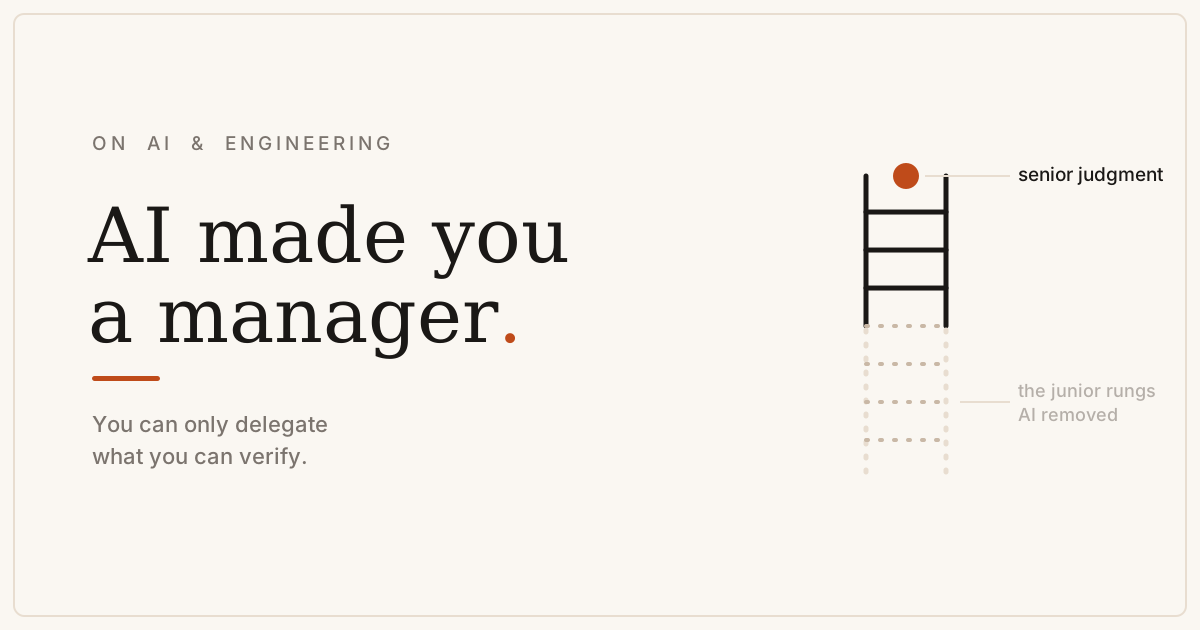
AI makes producing work nearly free while draining the human judgment that catches it when it's wrong. Deciding which understanding to keep in-house is now strategic.
A frontier model just produced a novel math proof while similar tools still fumble routine operations. The dividing line is verifiability, not difficulty.
Public coding benchmarks have decoupled from real work. The teams getting value from AI build a small evaluation from their own merged pull requests instead.
Every new car in Europe now ships an eye-tracking AI model no buyer chose. How that feature is failing is a preview of what happens when AI gets mandated onto a product.
Meta is spending $145B on AI yet says agents have stalled. The real limit is compounding math, and it decides which workflows you can safely hand to an agent today.
A small open-source video platform shipped a major release this week, and the online reaction split into 'nice tech, doomed to fail' versus something more interesting. The argument reveals how badly we've let one company define what a successful video platform even looks like.
Almost every viral money take is built on one of four simple mix-ups: a total confused with a yearly rate, the headline number confused with earnings, how tax slabs work, and a multiple confused with a real return. Here's how to spot all four.
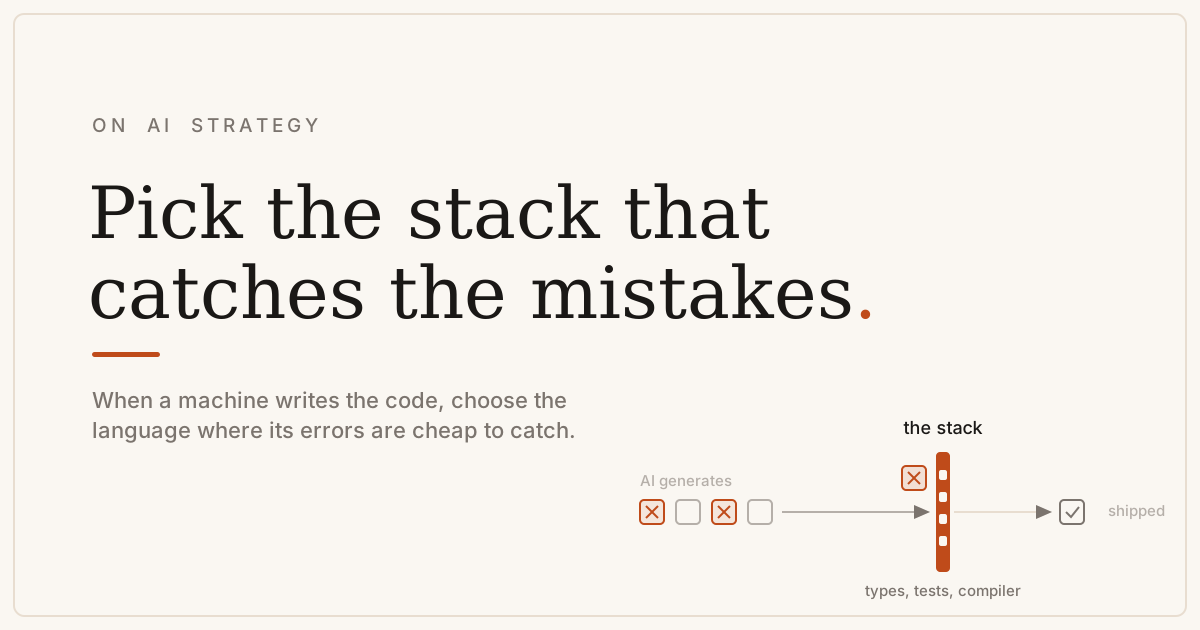
Almost every team now codes with AI; only a third governs it. The teams pulling ahead review AI's output as seriously as they once reviewed their own code.