Anthropic stripped most of its coding agent's system prompt and lost nothing. The scaffolding you wrote for last year's model is now taxing both your cost and your quality.
Entrepreneurship
AI slashed the cost of shipping features but not the cost of reliability, so it amplifies whatever your organization already rewards. Most reward the wrong thing.
A new study found AI access cut people's willingness to admit ignorance from 44% to 3% while their confidence doubled. The real risk isn't the wrong answers.
Stack Overflow's question volume fell 78% in a year. As the public corpus freezes, competitive advantage shifts to the knowledge your company still writes down itself.
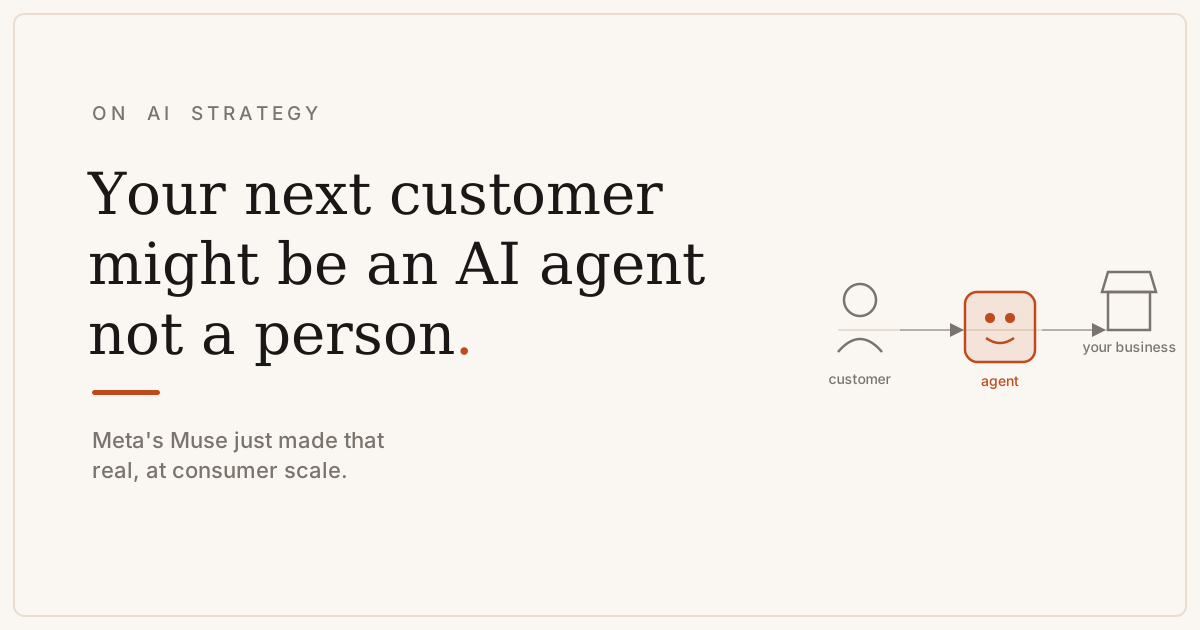
Stripe and Advent bid $53 billion for PayPal. The real target is 440 million consumer accounts, arriving just as AI agents begin doing the buying for people.
Microsoft's engineers merged 24% more pull requests with AI. The constraint didn't vanish; it moved to review, and most teams are still counting the wrong thing.
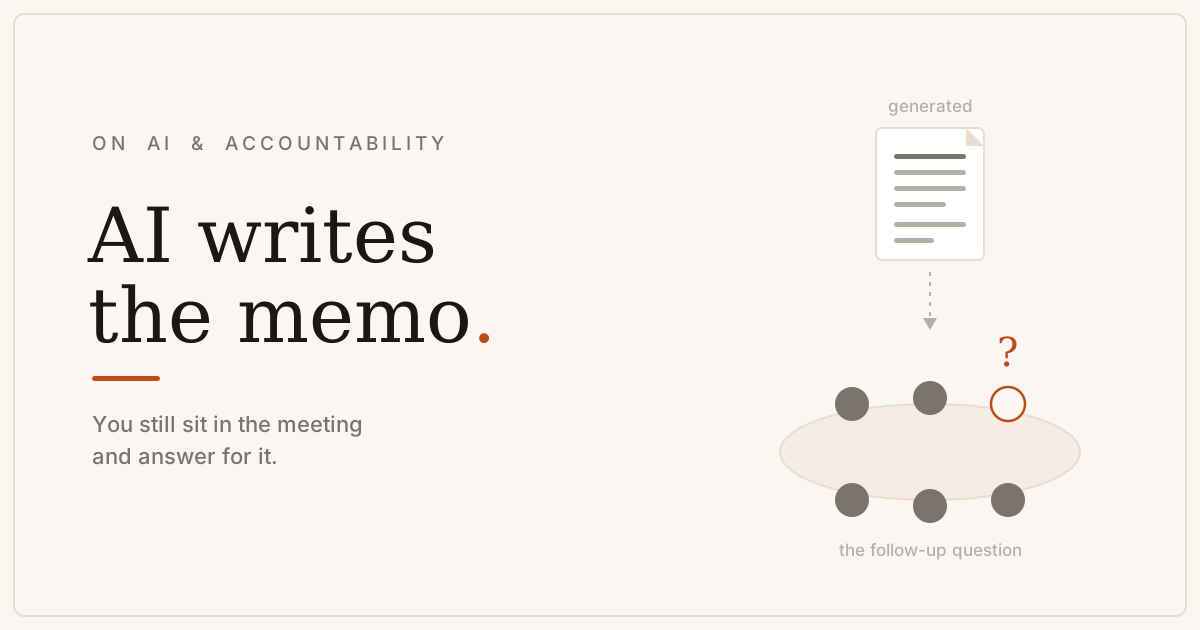
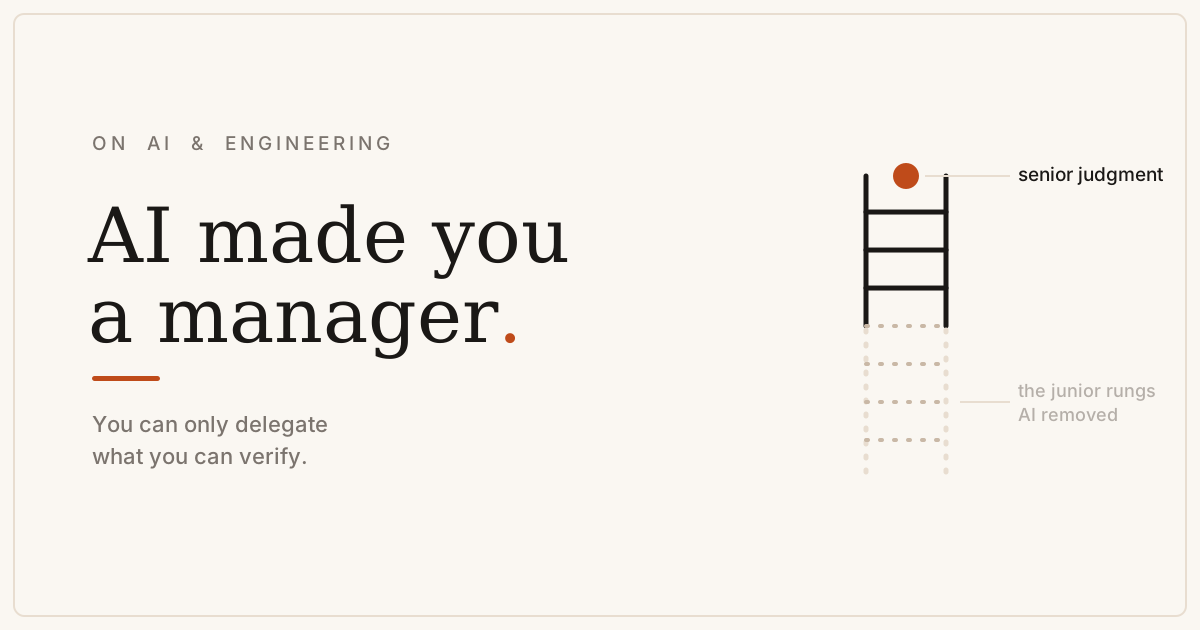
AI makes producing work nearly free while draining the human judgment that catches it when it's wrong. Deciding which understanding to keep in-house is now strategic.
A frontier model just produced a novel math proof while similar tools still fumble routine operations. The dividing line is verifiability, not difficulty.
Public coding benchmarks have decoupled from real work. The teams getting value from AI build a small evaluation from their own merged pull requests instead.
Every new car in Europe now ships an eye-tracking AI model no buyer chose. How that feature is failing is a preview of what happens when AI gets mandated onto a product.