AI can write the memo. It can't sit in the meeting.
The visible signs of AI writing fade as models improve. What stays is that you can't defend work you never understood, and at some point someone asks.
Bryan Cantrill has a good phrase for the person who pastes a language model’s output onto LinkedIn and hits publish: their intellectual fly is open. Everyone in the room can see it. The author is the only one who can’t. The emojis, the single-sentence paragraphs, the “it’s not just X, it’s Y” cadence. The tells are consistent enough that readers stop reading your argument and start reading the machine.
I agree with him. But I think the fixation on the tells points people at the wrong problem. Clean up the tells with a better model or a careful editing pass, and the deeper exposure is still there. It just goes quiet until the moment it matters.
The tell that a better model won’t fix
The stylistic giveaways are a temporary artifact. Models get harder to spot every few months, and the editing pass that launders them is getting cheaper too. If your worry is that a reader will clock the em dashes, that worry has a shelf life.
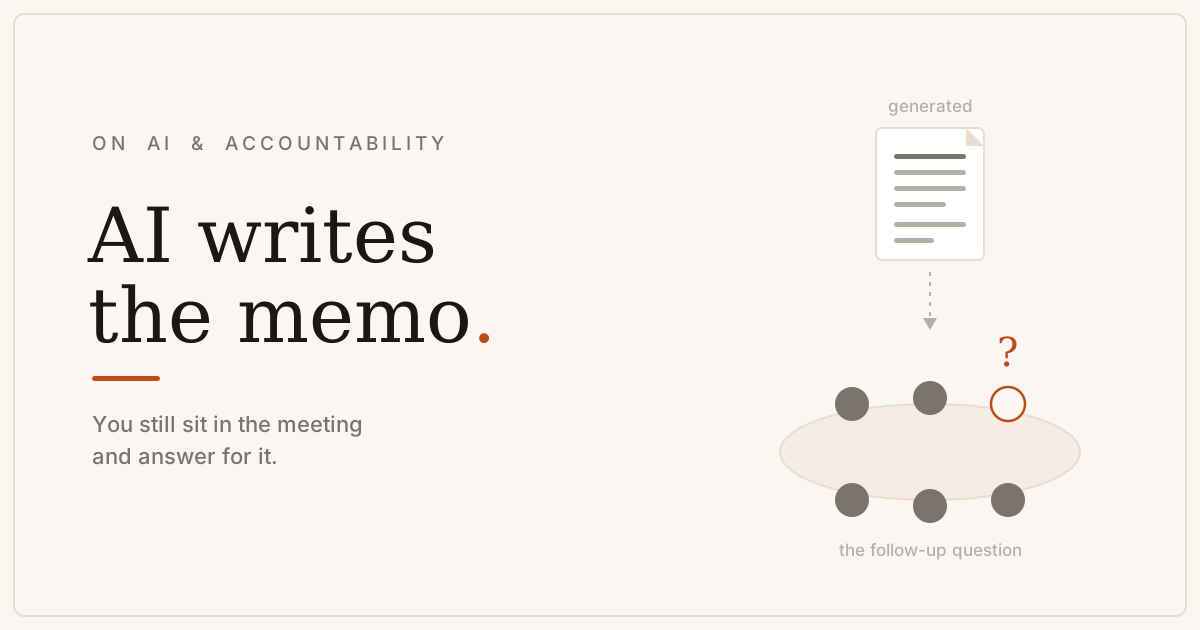
The durable tell is different, and no model removes it: you can’t answer the follow-up. Someone reads your memo, nods at the headline, then asks the second question. Why did you rule out the cheaper option. What happens at the edge case in the third paragraph. What is the assumption holding up the number on line four. If you generated the memo instead of thinking it, you have nothing. The fly was open the whole time. The follow-up is just when everyone finally looks down.
This is why AI writing gets caught in the meeting, not the inbox. A document can hide that you don’t understand it. A conversation can’t.
Production moved. Accountability stayed.
Here is the asymmetry that leadership teams keep underpricing. AI transferred the production of work: the drafting, the coding, the first-pass analysis. It did not transfer the accountability for it. Your name is still on the memo. Your team still merges the pull request. The board deck still carries your logo, and you still stand at the front of the room when it goes up.
So the hour you saved is often just deferred, and you pay it back at a worse rate: in the meeting, in production, in the audit, in front of the customer. I’ve argued before that automation is cheap and understanding is the bill you don’t see. This is that bill, itemized. Generation was free. The defense is not.
Effort used to be the proof. Now it’s cheap.
There’s a small piece of economics under all of this. For as long as good work was expensive to produce, effort was a costly signal of understanding. If you had written the ten-page analysis, you had probably read the source, caught the obvious holes, sat with the objection. The effort had no value in itself, but it correlated with judgment, so we used it as a proxy and mostly got away with it.
AI cut that correlation. A thorough-looking analysis now costs seconds, so the polished artifact tells you nothing about whether a person stands behind it. I’ve made the case that the fix isn’t to demand effort again but to make people say what they are actually vouching for. At the level of an organization the point is sharper: any signal of understanding that AI can now counterfeit will stop working, and you will have to pay for a more expensive one. The expensive signals are live and verbal. Explain your pull request. Walk me through the tradeoff. Tell me what would change your mind. Cheap signals get automated away; trust migrates to the ones that are still costly to fake.
What changes if you’re the one leading
Three things I’d put to a leadership team.
Separate generation from endorsement, and don’t let the second become a signature. A model can generate anything. It cannot endorse on your behalf, because endorsement means you can rebuild the reasoning when someone pushes on it. Design the workflow so the human endorsement step is real work and not a rubber stamp.
Change what you reward. If you keep promoting the most polished output, you are now selecting for prompt access, not for judgment. Reviewing is the job now, so pay and praise the review, not the word count.
Adopt one test before anything ships with your name on it: could I defend this against a follow-up I hadn’t rehearsed? If the honest answer is no, you don’t own the work. You’re holding it, and you’ll put it down the second someone leans on it.
The part that still doesn’t scale
The uncomfortable version of all this is that understanding never scaled, and AI didn’t change that. It made output scale, which fooled a lot of smart people into assuming the understanding rode along for free. It didn’t. Someone on your team still has to sit in the meeting and answer the question the model never saw coming. Decide now who that person is for each thing that matters. You’re choosing either way. Not choosing just means you find out during the meeting.
If working out which understanding to keep in-house and which to let the model produce is the question in front of you, that is most of what an AI advisory hour is for.