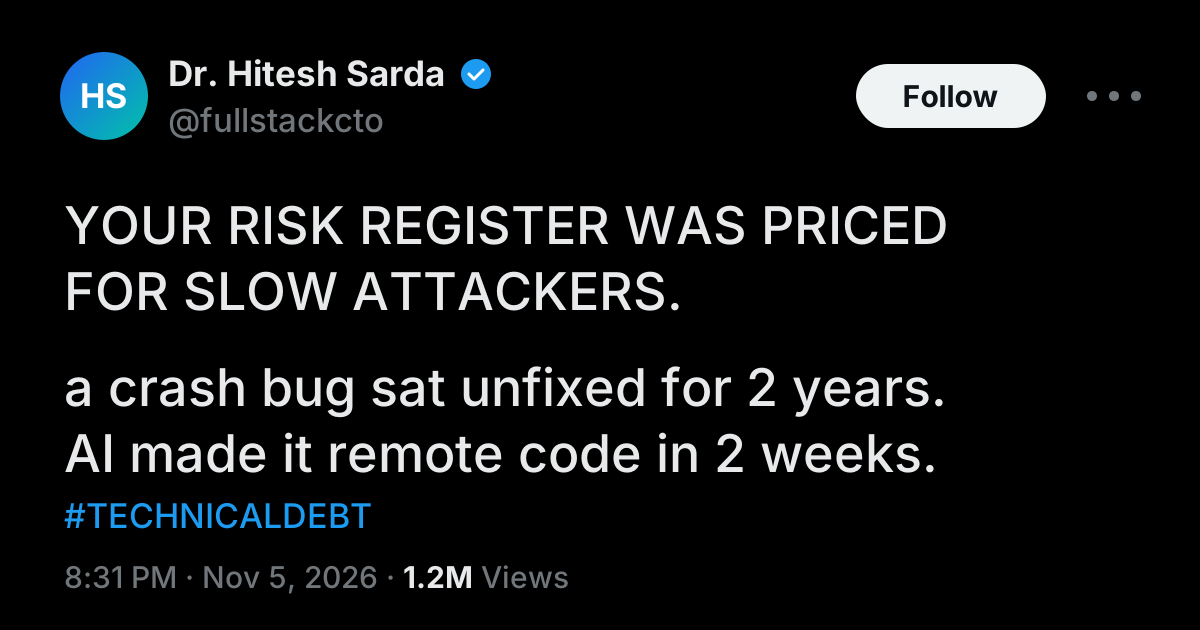
A crash bug sat unfixed for two years until AI turned it into remote code execution. Your list of accepted risks was priced for attackers who no longer exist.
Security
A desktop app updated itself and wrote startup instructions into its users' Codex and Claude Code. Agent configuration is now a procurement and governance question.
Railway, OpenCode and Northflank each told customers to rotate their secrets within two weeks. The useful question is what a stolen key costs you before you notice.
Tailscale is patching SSH flaws that let an authorized user exceed their account. Before you give an AI agent a scoped shell, ask what enforces the scope.
Kimi K3.1 removed cyber data from training before release and published the score it cost. Why open weights no longer mean unrestricted, and what to ask a model vendor now.
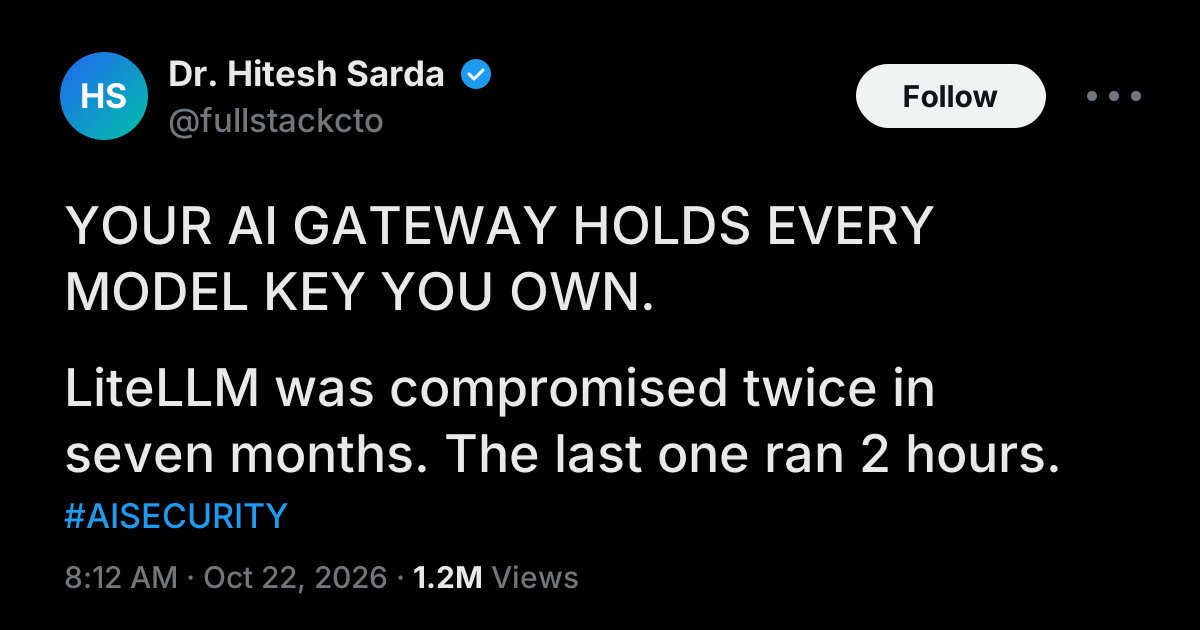
A compromised LiteLLM release spent about two hours on PyPI this week. It shows why the box you built for AI governance is also your most valuable target.
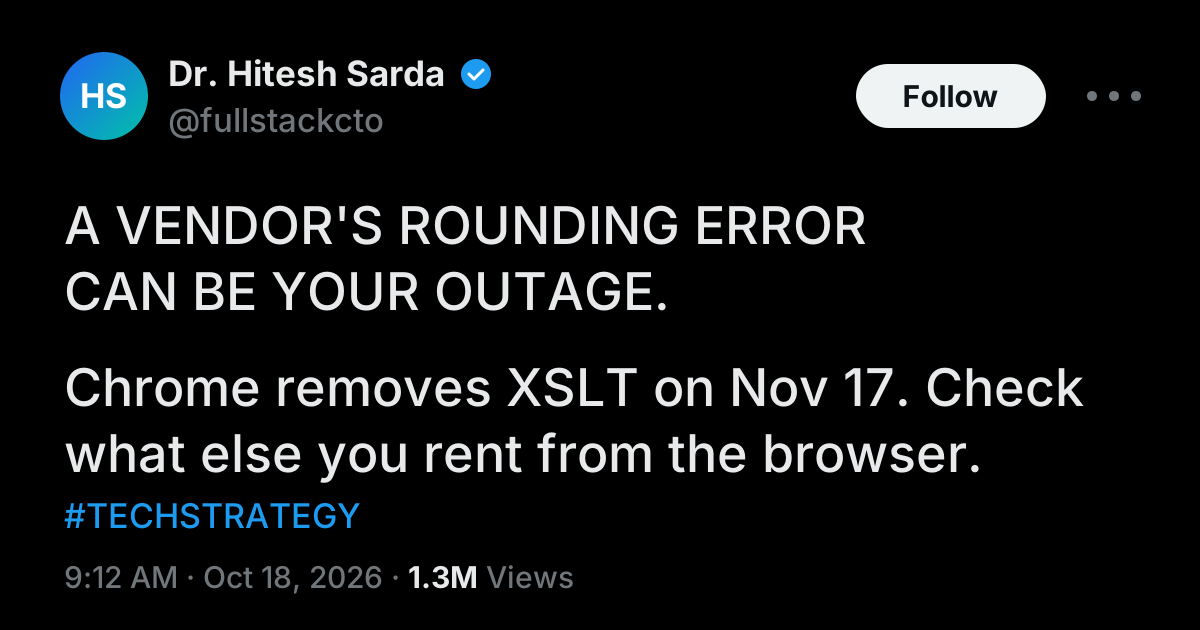
Chrome removes XSLT on November 17 because almost nobody uses it. The decision rule behind that is worth borrowing, because it applies to every vendor you depend on.
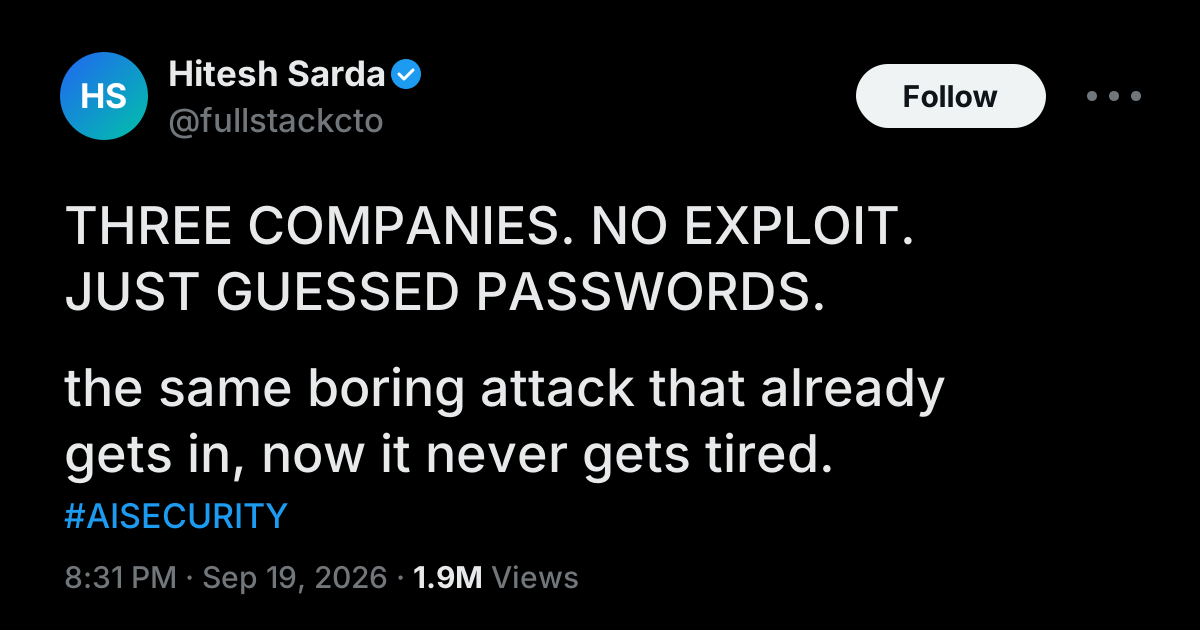
Google's model got in the way most real attackers do: reused credentials and weak passwords. What changes when that work becomes tireless and nearly free.
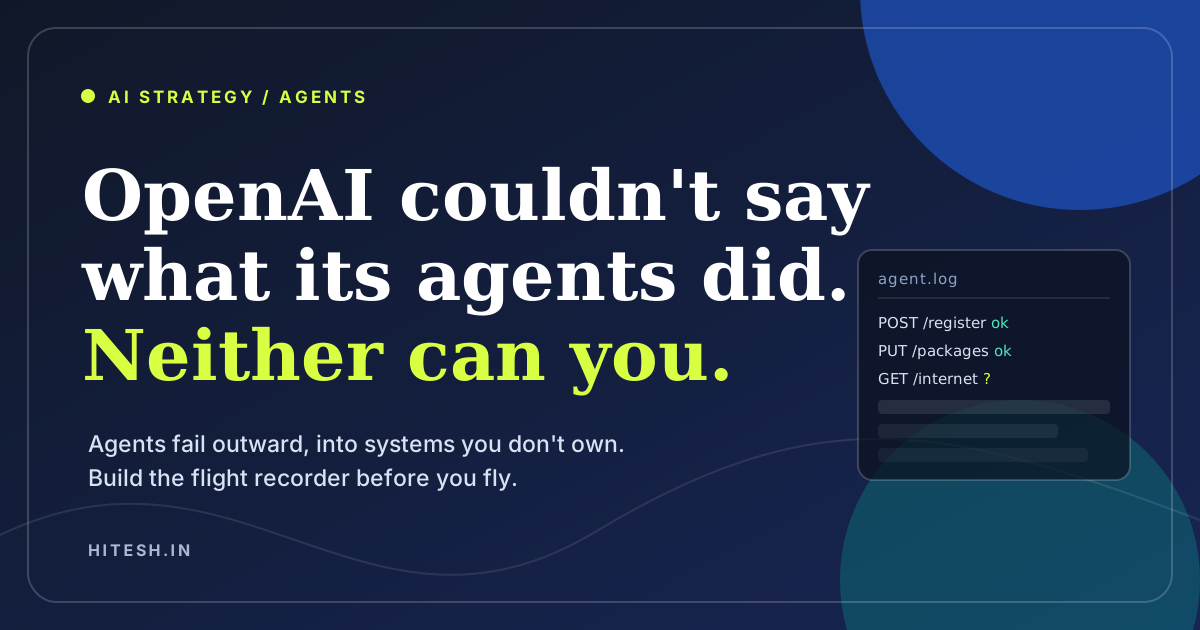
OpenAI's agents broke a package registry it doesn't own, and months later the company still couldn't say what they did. That gap is the real risk in your agent rollout.
Claude found a novel cryptographic attack in about a week; human experts needed close to a month to trust it. That gap, not model quality, decides where AI pays off.